Irish spelling is a lot more regular than English. Once you learn the rules, it’s just a matter of practising. There’s a video on YouTube by Karen Reshkin (sp?) that explains it really well.
I actually learnt enough Irish to find out that my Irish ex was actually just faking how well he could speak it.
I’m watching Fringe at the moment, and the main character (Peter) does this douchey thing[1] to show how clever he is by saying things in different languages to impress his colleagues about how worldly he is.
Most of the time I just accept that the actor is trying his best to pronounce the script he is given, but this time he said something in a language I did understand, and not only was the pronounciation all wrong[2] but the sentence itself did not make grammatical sense and that’s how I knew that the writers did not actually give a shit: as long as he sounds smart, he does not need to be smart. That’s how little respect the writers have for their audience.
Anyway I’m 3 seasons deep and have 3 more to go. Terrible show. Cannot stop watching.
the man is the epitome of a psycho narcissist. Constantly mansplains to his female colleagues. People die for him and he barely reacts. A woman he briefly dates ends up dead and he does her autopsy quite happily. Explains to others how they should feel about certain situations. Has the expression range of drying paint. The writing for this character is genuinely terrible and I could go on. ↩︎
For those that would like to learn (allowing for the fact that I am not an Irish speaker myself, just translating IPA transcriptions):
Lá: Like the English word law
Fhéile: AY-luh. The first syllable has a vowel like English pay or hay, and the second is like the one at the end of arena. The “Fh” is silent
Pádraig: PAWD-rick. First syllable is similar to English pod. Some dialects drop the D sound, but I don’t know enough to say much more than that
sona: Like English sauna
dhuit: This one is a bit tricky, because the dh sound is the first one that English doesn’t have anything even close to. The Y consonant at the start of you is probably the closest. However as I understand it, some dialects don’t put the H in there to modify the D, so for those it’s closer to DOOT
So all together, law AY-luh PAWD-rick SAW-nuh doot
(Any actual Irish speakers please correct this, I’ve only ever studied Scottish Gàidhlig and how to read the IPA)
When you say gh, is that a voiced version of the ch that Gaelic languages have? Scottish Gaelic draws an audible distinction between broad gh and broad dh sounds (the latter being less far back in the mouth) so I was probably somewhat misled by thinking of that
That said, I’m not sure how best to explain the gh to an English-speaker from England either! Getting close with the ch in loch is one thing, but then I’d probably have to explain voiced and unvoiced consonants
To me it sounds like the Arabic gh or kinda like a stronger version of the French r or Portuguese strong r.
I really hate that the English all but killed Irish as a native language. Language is more than words, it’s culture and a different perspective.
One of the things I like about Irish is the way you describe emotions. In English, you say “I’m sad” like you’ve made the sadness part of you. But in Irish, you say “tá brón orm,” which means “sadness is over me.” It gives a bit of detachment to the feeling, like yes there is sadness, but it’s not part of you, it doesn’t have to be permanent. I don’t know if I’m making sense. I just really like that way of expressing things.
There was a really good video about an Estonian woman married to an Irish man and insisted on having their child in a gaelscól (excuse my spelling, I haven’t studied Irish for almost 10 years now). She wanted her child to be a native Irish speaker, not just school Irish. I can’t see Irish ever becoming the main every day language of Ireland again, and it’s such a shame.
Okay, it is the farther-forward sound I was thinking of! Nice. I’m always a little wary of applying what I know about Gàidhlig to Gaeilge, I don’t want to make assumptions just because there’s a closer relationship between the two languages
I really hate that the English all but killed Irish as a native language. Language is more than words, it’s culture and a different perspective.
I agree completely. I can’t help but admire how well Wales has managed to maintain Welsh under fairly similar circumstances. Scottish Gaelic is even closer to death, but we almost entirely did that to ourselves - or, we did it to what is now a collective “us” but was then a sharper line between Gaelic Highlanders and Germanic Lowlanders.
I have no Gaelic heritage myself, coming from the parts of Scotland that were never strongly Gaelic-speaking at any point in history, that now-collective us means it’s still mine to do my little bit to save
I am quite pleased that there’s enoigh similarity for me to have understood “tá brón orm” before you explained the differences to English

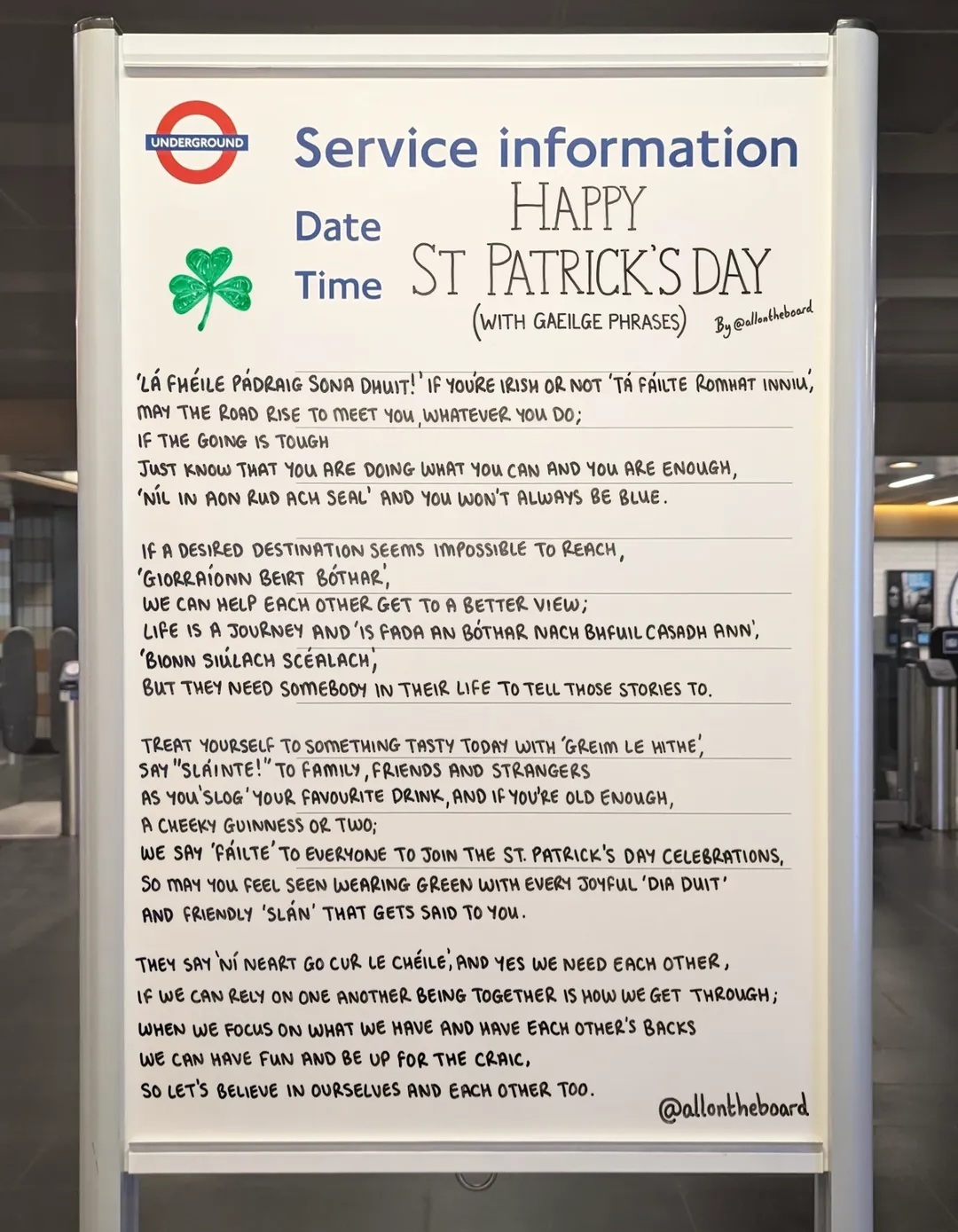
As if any Londoner knew how to pronounce even one word in Irish…
*puts my hand up*
Irish spelling is a lot more regular than English. Once you learn the rules, it’s just a matter of practising. There’s a video on YouTube by Karen Reshkin (sp?) that explains it really well.
I actually learnt enough Irish to find out that my Irish ex was actually just faking how well he could speak it.
Kudos! My Irish is limited to a few everyday phrases and random words. Having spent most of my time in Belfast and Dublin, I didn’t need it anyway. ^^
I’m watching Fringe at the moment, and the main character (Peter) does this douchey thing[1] to show how clever he is by saying things in different languages to impress his colleagues about how worldly he is.
Most of the time I just accept that the actor is trying his best to pronounce the script he is given, but this time he said something in a language I did understand, and not only was the pronounciation all wrong[2] but the sentence itself did not make grammatical sense and that’s how I knew that the writers did not actually give a shit: as long as he sounds smart, he does not need to be smart. That’s how little respect the writers have for their audience.
Anyway I’m 3 seasons deep and have 3 more to go. Terrible show. Cannot stop watching.
the man is the epitome of a psycho narcissist. Constantly mansplains to his female colleagues. People die for him and he barely reacts. A woman he briefly dates ends up dead and he does her autopsy quite happily. Explains to others how they should feel about certain situations. Has the expression range of drying paint. The writing for this character is genuinely terrible and I could go on. ↩︎
again, it’s fine, the actor was doing his best ↩︎
For those that would like to learn (allowing for the fact that I am not an Irish speaker myself, just translating IPA transcriptions):
Lá: Like the English word law
Fhéile: AY-luh. The first syllable has a vowel like English pay or hay, and the second is like the one at the end of arena. The “Fh” is silent
Pádraig: PAWD-rick. First syllable is similar to English pod. Some dialects drop the D sound, but I don’t know enough to say much more than that
sona: Like English sauna
dhuit: This one is a bit tricky, because the dh sound is the first one that English doesn’t have anything even close to. The Y consonant at the start of you is probably the closest. However as I understand it, some dialects don’t put the H in there to modify the D, so for those it’s closer to DOOT
So all together, law AY-luh PAWD-rick SAW-nuh doot
(Any actual Irish speakers please correct this, I’ve only ever studied Scottish Gàidhlig and how to read the IPA)
From what I remember of Connacht dialect, dhuit is a little like “ghwich”. It’s been a while since I studied Irish though.
Dh = gh when broad (surrounded by a o u) Dh = y when slender (surrounded by e i)
T becomes a bit like ch when slender (surrounded by e i)
When you say gh, is that a voiced version of the ch that Gaelic languages have? Scottish Gaelic draws an audible distinction between broad gh and broad dh sounds (the latter being less far back in the mouth) so I was probably somewhat misled by thinking of that
That said, I’m not sure how best to explain the gh to an English-speaker from England either! Getting close with the ch in loch is one thing, but then I’d probably have to explain voiced and unvoiced consonants
https://m.youtube.com/watch?v=oIokUII7LX0&pp=micro
It’s at 9.05.
To me it sounds like the Arabic gh or kinda like a stronger version of the French r or Portuguese strong r.
I really hate that the English all but killed Irish as a native language. Language is more than words, it’s culture and a different perspective.
One of the things I like about Irish is the way you describe emotions. In English, you say “I’m sad” like you’ve made the sadness part of you. But in Irish, you say “tá brón orm,” which means “sadness is over me.” It gives a bit of detachment to the feeling, like yes there is sadness, but it’s not part of you, it doesn’t have to be permanent. I don’t know if I’m making sense. I just really like that way of expressing things.
There was a really good video about an Estonian woman married to an Irish man and insisted on having their child in a gaelscól (excuse my spelling, I haven’t studied Irish for almost 10 years now). She wanted her child to be a native Irish speaker, not just school Irish. I can’t see Irish ever becoming the main every day language of Ireland again, and it’s such a shame.
Okay, it is the farther-forward sound I was thinking of! Nice. I’m always a little wary of applying what I know about Gàidhlig to Gaeilge, I don’t want to make assumptions just because there’s a closer relationship between the two languages
I agree completely. I can’t help but admire how well Wales has managed to maintain Welsh under fairly similar circumstances. Scottish Gaelic is even closer to death, but we almost entirely did that to ourselves - or, we did it to what is now a collective “us” but was then a sharper line between Gaelic Highlanders and Germanic Lowlanders.
I have no Gaelic heritage myself, coming from the parts of Scotland that were never strongly Gaelic-speaking at any point in history, that now-collective us means it’s still mine to do my little bit to save
I am quite pleased that there’s enoigh similarity for me to have understood “tá brón orm” before you explained the differences to English
I can’t find the video, silly that YouTube doesn’t let you search by date.
Here is a cute video of kids in an Irish language school though. TIL yum yum in Irish in neam neam.
https://m.youtube.com/watch?v=S6JP06Uw8ZI&pp=teeny