
Just being forced to talk about how it’s going and what’s blocking can be helpful, so I’m glad you’re questioning for to be more useful, not doing a little rubber-ducking isn’t all bad.
- 4 Posts
- 15 Comments
Joined 1 year ago
Cake day: July 2nd, 2023
You are not logged in. If you use a Fediverse account that is able to follow users, you can follow this user.

 2·1 month ago
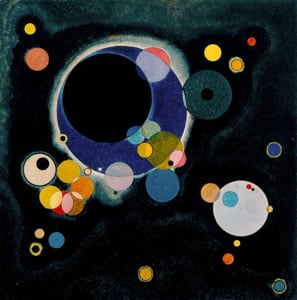
Is she carrying a hatchet?
This biography quotes a description:
armed entirely in white, exept, for the head, a little ax in her hand, seated on a great black courser.
 11·1 month ago
Scalping was not in itself fatal, though it was most commonly inflicted on the gravely wounded or the dead.
Still, one of many reasons I am glad to live in the time period and country I do. Though also a reminder of how close in our history America is to genocide:
on August 8, 1722, Massachusetts put a bounty on native families, paying 100 pounds sterling for the scalps of male Indians aged 12 and over, and 50 pounds sterling for women and children.
 80·2 months ago
“I think we are headed for major societal disruption within the next five years,” Gretta Pecl of the University of Tasmania told The Guardian. “[Authorities] will be overwhelmed by extreme event after extreme event, food production will be disrupted. I could not feel greater despair over the future.”
But, reason to keep fighting:
Others found hope in the climate activism and awareness of younger generations, and in the finding that each extra tenth of a degree of warming avoided protects 140 million people from extreme temperatures.



The headline doesn’t say anything about what I might expect to find in the article, it just claims it’s gonna be great.
 6·5 months ago
The way the two shoes are weirdly merged together is a nice touch.
Some fascinating history, thanks for the note!

Actually a lot of Google “satellite” imagery is from planes, as I assume this is.
 9·6 months ago
It wasn’t that long ago that he did a bunch of work to switch from Reddit to Lemmy. So I’m feeling well supported. Though not averse to hearing about other good clients.
 5·6 months ago
My mom’s cat has learned that gloves = OK to claw, bare hands = no, improved from just clawing all the time. So, some cats may be able to learn correct context.
 1·9 months ago
Where does the NYPD keep getting these expensive but apparently useless robots?
Right. I care less about 60% less power, and more about will it randomly connect my phone to my car as my partner drives away instead to the speakers I was already using on the desk next to me.
Martha Wells. Finished the Murderbot series, wrapping up the Raksura. All very much of the same cloth, but I enjoy it.
Also recently discovered Naomi Novik’s Scholomance trilogy, I had only read her Temeraire books before.

There’s still a huge racial disparity in tech work forces. For one example, at Google according to their diversity report (page 66), their tech workforce is 4% Black versus 43% White and 50% Asian. Over the past 9 years (since 2014), that’s an increase from 1.5% to 4% for Black tech workers at Google.
There’s also plenty of news and research illuminating bias in trained models, from commercial facial recognition sets trained with >80% White faces to Timnit Gebru being fired from Google’s AI Ethics group for insisting on admitting bias and many more.
I also think it overlooks serious aspects of racial bias to say it’s hard. Certainly, photographic representation of a Black face is going to provide less contrast within the face than for lighter skin. But that’s also ingrained bias. The thing is people (including software engineers) solve tough problems constantly, have to choose which details to focus on, rely on our experiences, and our experience is centered around outselves. Of course racist outcomes and stereotypes are natural, but we can identify the likely harmful outcomes and work to counter them.
I wonder how it was sealed. Is glazed ceramic + wax that airtight? The article (nor many very similar ones from other sites) doesn’t give specifics.