lnxtx (xe/xem/xyr)@feddit.nl to 196@lemmy.blahaj.zoneEnglish · 2 years agoVal(r)u(l)efeddit.nlimagemessage-square14linkfedilinkarrow-up1117arrow-down19
arrow-up1108arrow-down1imageVal(r)u(l)efeddit.nllnxtx (xe/xem/xyr)@feddit.nl to 196@lemmy.blahaj.zoneEnglish · 2 years agomessage-square14linkfedilink
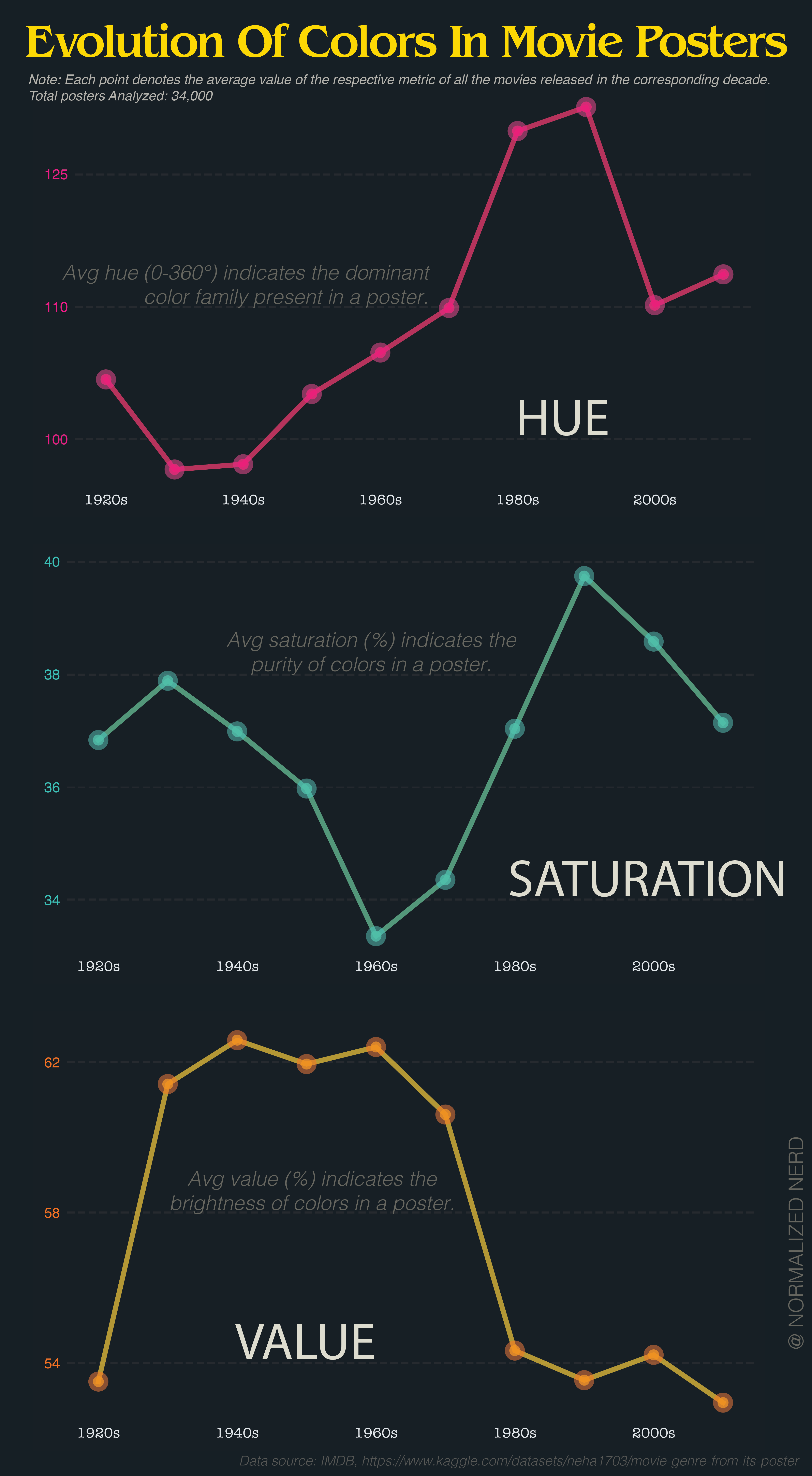
minus-squareZwiebel@feddit.orgBanned from communitylinkfedilinkEnglisharrow-up61·2 years agoI’d be nice to have a color legend next to the y-axis of hue
minus-squareSpaceNoodle@lemmy.worldlinkfedilinkarrow-up35·2 years agoOr even better, change the color of the points and lines to match the associated hue.
minus-squarepetrol_sniff_king@lemmy.blahaj.zonelinkfedilinkarrow-up10·2 years agoThat’d be nice. 90 and 120 are rolling through the greens. Are posters mostly green? That seems odd to me.
minus-squarebob_lemon@feddit.orglinkfedilinkarrow-up17·2 years agoThe problem is that averaging hue makes no sense at all because hue is not a longest scale. If you take a red poster (0) and a blue poster (240), it averages to green. Or take red (0) and red (359), averaging to cyan (180).
minus-squareflying_sheep@lemmy.mllinkfedilinkarrow-up7·2 years agoThe average of 0° and 359° is obviously 359.5°. it’s a radial scale.
minus-squarebob_lemon@feddit.orglinkfedilinkarrow-up9·2 years agoBy that logic, the average of red and cyan is both purple and lime. Still useless.
minus-squareflying_sheep@lemmy.mllinkfedilinkarrow-up2arrow-down1·2 years agoNot if there is a clear trend. If most movie posters are blue, three average will be blue. But i agree, it is useless if there is no clear trend.
minus-squareStarbuncle@lemmy.cadeleted by creatorlinkfedilinkEnglisharrow-up5·edit-21 year agodeleted by creator
minus-squareStarbuncle@lemmy.cadeleted by creatorlinkfedilinkEnglisharrow-up2·edit-21 year agodeleted by creator
minus-squareshneancy@lemmy.worldlinkfedilinkarrow-up9·2 years agoyeah that part of the graph is completely useless to people who haven’t memorised the exact degrees of the scale, which is most people, even most artists


I’d be nice to have a color legend next to the y-axis of hue
Or even better, change the color of the points and lines to match the associated hue.
That’d be nice.
90 and 120 are rolling through the greens. Are posters mostly green? That seems odd to me.
The problem is that averaging hue makes no sense at all because hue is not a longest scale.
If you take a red poster (0) and a blue poster (240), it averages to green. Or take red (0) and red (359), averaging to cyan (180).
The average of 0° and 359° is obviously 359.5°.
it’s a radial scale.
By that logic, the average of red and cyan is both purple and lime. Still useless.
Not if there is a clear trend. If most movie posters are blue, three average will be blue.
But i agree, it is useless if there is no clear trend.
deleted by creator
You know what, I completely agree.
deleted by creator
yeah that part of the graph is completely useless to people who haven’t memorised the exact degrees of the scale, which is most people, even most artists